Before deciding how to fix the problem, compare how different people are experiencing it.
-- Gallup’s 2026 Team Experiences research

Before deciding how to fix the problem, compare how different people are experiencing it.
-- Gallup’s 2026 Team Experiences research

I’ve noticed…that it's how I respond to the gap between what I think something should take (effort-wise) and what it actually does that matters.
There are a few things as invigorating as working at something good.
Opportunities surround us all the time — the point isn't to try to take advantage of all of them, just some of them is all we need to do.
Though perhaps not always in many day-to-day interactions, human beings are (generationally) surprisingly adaptable to their environments.
What is one thing you would really love to know the answer to?
Prior 3 Observations & A Question….
There is so much to say right now and so little that seems new — that isn't just repeating the Zeitgeist we're immersed in....
It's like we are all just holding our breath, hoping that something will change the calculus we're using.
Will the election do it? It’s hard not to wonder what will happen after it…whichever way it goes. Will anything really change (given the character-based tenor of things)? Will there be any real, serious work on substantive issues?
After the demise of so many of our institutions, we are looking for something to believe in again. Something that translates our spiritual ideals into something pragmatic for the way we live our lives each day.
Something feels out of control. And, the future has been effectively depicted as something largely to be terrified of. Even those still holding out for technology-based solutions feel perceivably vacuous.
And eerily, planting gardens again feels a bit inadequate against the existential concerns surrounding us, seemingly everywhere you look.
But, I'm going to slide something under the door here:
There is always something deeper that is still true (obscured as it may feel at any given moment).
And, this moment is moving us toward it, individually and collectively.
Will we finally take our echo-chamber blinders off and get to the real work that is needed?
It is up to us now. We've already seen enough of what politicians are interested in (another unbelievable 'dropping the ball' example here) or, in this case, not interested in. We can't defer (to them) any longer.

Most beliefs are soft until challenged. When you tell someone they're wrong, the belief hardens.
Instead of trying to convince someone they're wrong, assume they know something you don't and figure out what it is.
I've found that saying, "Seems like you have a reason for saying that ..." helps them explain instead of defend. Half the time, they'll find gaps in their own reasoning before you have time to point them out. The other half, you'll learn something and change your own mind.
Ever noticed...how hard it is to not be in the future (and in the present instead) when you’re not with other people?
To put it the opposite way; is it easier to be in the moment when you're with other people? ...even though it's quite obvious (especially to others) when you still aren't.
Jesus reformed the laws of religion and undercut the basis for all violent, exclusionary, and punitive behavior. He became the forgiving victim so we would stop creating victims ourselves. He became the falsely accused one so we would be careful whom we accuse.
This is Jesus’s simple message: Holiness is no longer to be found through separation or exclusion, but through radical inclusion. Any exclusionary system only lays the solid foundation for violence in thought, word, and deed.
-- Richard Rohr
Paying attention can help you avoid choosing things that diminish you.
Take care to understand who you really are, including what most establishes that understanding.
If you don’t do what you really want to do, you should ask yourself why — there's usually only about one reason.
There is a profound legacy of human goodness and you have the wonderful (albeit sometimes challenging) opportunity to personally perpetuate it — so how do you want to do that?
Prior 3 Observations & A Question….
They agreed because I said they agreed.
-- Mr. Trump, referring to the Ukraine/Russia cease-fire he had announced at the White House
...well OK then. But, how about:
A closer look at the US-Russia diesel deal
Washington Is Warning of Election Threats While Weakening Our Defenses
...and that may not be the worst of it:
Ukraine loses Starlink access as Musk says Zelenskiy went "too far"
...so who put Musk in charge of these things? (Not really a question; we know who did...).
“I can do whatever I want, if I want.” — Trump's arrogance never stops (if only this was the worst of it):
Because it isn't:
They Shouted “USA!” As Men Beat A Woman...unfathomable for an American President to publicly pile on in such a situation.
And the wanna-be waiting in the wings has been taking notes, using the same shtick:
JD Vance smeared James Talarico, then admitted he was “just guessing”...where do these guys come from (naively or not, I used to think Republicans were more noble than this)?
At least there's some resistance (late as it may be — too little, too late?):
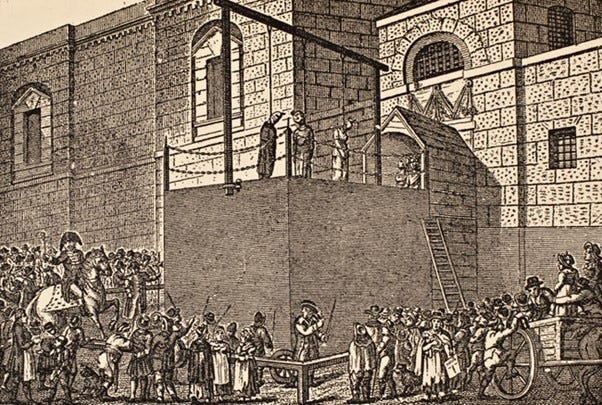
Public Execution Won’t Have the Effect Intended
As if all this wasn't enough, there's what happens when you intentionally undermine public confidence with misinformation:
This disease now declared an emergency — Maps show where it's spreading.
There's almost no sphere where the fissures aren't deepening in our systems:
Another lingering reflection, on a recent I'm Wondering...:
I'm wondering...about our frame of reference.
Frame of reference, basically, is what we think we know and why we know it. Initially, we don't think about it very much. We just experience it.
Much of our frame of reference is established (and constrained) by our particular experience — what we have experienced and what we haven’t experienced. We have to admit that our experience is limited...to what we have experienced.
At one point or another, something prompts a deeper question. How do we know (not just what we do know and why)?
For example, how much of what we think we know is true is simply because of the frame of reference we are currently in? What if we were in a different frame of reference? What would we think would be true then?
We all have a point of reference. It's natural; even needed for our development. It helps us at key points in our lives.
And, it can limit us — we may simply not see important things because of it.
To test the theory, notice what happens when things change. You basically have two options. Get things to change back or change how you view them. To do the latter, you have to change your point of view — how you think about what is happening, about what is different?
This often happens to us more than once over the course of our lives (even it we don't recognize it). Sometimes it happens simply because of a change of circumstances (insignificant or substantial). Sometimes education and growth is involved. Sometimes our carefully constructed worlds no longer seem to fit with the larger experience we are seeing or experiencing.
Traveling overseas during college was one my first significant encounters with my frame of reference — what it was and how other people's frame of reference was different. Having kids was another one — what I thought going into it really needed to be expanded. Right now I'm in a job arrangement that is pretty unfamiliar (at least for me) — I've been using my frame of reference to evaluate it...and it needs to change, to allow for other possibilities. In each case, I have had the opportunity to change what I use to evaluate things. Each situation is obviously different; it would follow then that my criteria should, too.
So, sometimes, you have to be willing to allow your point of reference to change.
Whether it is forced upon on us or a choice we make, most of the time, over the course of one's life, there is an opportunity (one way or another) for it to evolve.
I'm wondering...today about our frame of reference.
How it helps us, how it limits us, and when it evolves.
For one thing, how things start each day impacts mine:


...today's sunrise reminded me of part of my frame of reference.
We often do not see things, because of how and where we’ve been trained to look.
There’s usually one or two things that you are deeply committed to — because the perceived consequences would be too costly, if you weren’t.
Wisdom is often not perceived in the eye of the beholder, especially in the moment.
Why wouldn’t you?
Prior 3 Observations & A Question….
He acts like he has no relatives.
-- An old Indian saying (on the worst thing that can be said about a person, from Listen, Learn, and Contribute)
Humility is the pathway to knowledge and understanding.
When pride becomes arrogance or conceit, knowledge (and especially understanding) dissipates.
We can certainly see evidence of this at large right now, can't we?
Or, maybe we can't, unless we've first seen it in ourselves.
I must admit, I have seen it in myself. And, the consequence has, in fact, been that I lose both understanding and knowledge. Only when we are humbled (or when we allow ourselves to be humbled), do we seem capable of reversing course and seeing the return of growth of knowledge and understanding again.
Understanding is a two-way street.
-- Eleanor Roosevelt
More often than once, I have discovered (sometimes quite painfully) that what I thought I knew was happening really wasn't what was happening or, at the very least, all that was happening. As the evidence that that was the case became clear, I had the opportunity to be more curious, more open, more capable of saying I was wrong or limited in my understanding.
For one thing, I simply don't know everything that is happening and that should be the given default in most situations. When I'm pretty sure about something, I still have the option to consider what I might not know about it.
Humility isn't as much about being wrong or embarrassed about not knowing as much as it is about an overall disposition towards what I don't know, rather than simply what I think I know. Both are involved — being humble allows for that discovery.
There is a difference between losing and failing. Losing reflects the score. Failing reflects our attitude.
-- Simon Sinek
'Poem for the week' -- "Fall":
Fall
Fall, falling, fallen. That’s the way the season
Changes its tense in the long-haired maples
That dot the road; the veiny hand-shaped leaves
Redden on their branches (in a fiery competition
With the final remaining cardinals) and
then
Begin to sidle and float through the air, at last
Settling into colorful layers carpeting the ground.
At twilight the light, too, is layered in the trees
In a season of odd, dusky congruences—a scarlet tanager
And the odor of burning leaves, a golden retriever
Loping down the center of a wide street and the sun
Setting behind smoke-filled trees in the distance,
A gap opening up in the treetops and a bruised cloud
Blamelessly filling the space with purples. Everything
Changes and moves in the split second between summer’s
Sprawling past and winter’s hard revision, one moment
Pulling out of the station according to schedule,
Another moment arriving on the next platform.
It
Happens almost like clockwork: the leaves drift away
From their branches and gather slowly at our feet,
Sliding over our ankles, and the season begins moving
Around us even as its colorful weather moves us,
Even as it pulls us into its dusty, twilit pockets.
And every year there is a brief, startling moment
When we pause in the middle of a long walk home and
Suddenly feel something invisible and weightless
Touching our shoulders, sweeping down from the air:
It is the autumn wind pressing against our bodies;
It is the changing light of fall
falling on us.
-- Edward Hirsch

A number of implications terminology-wise (besides the topic itself) — gotta get the word 'freedom' in there, too.
And, no surprises here:
The Department of Justice announced that it was charging a grand total of 10 noncitizens with allegedly either registering or voting in the state of Minnesota, over a period of several years. This constitutes, at most, 0.0003% of Minnesota’s active registered voters, based on data from the last federal general election. As the clock ticks down to Election Day, every rushed statement from the administration confirms what we’ve long known: noncitizen voting is infinitesimally rare and already well-prevented by the states.
-- Center for Election Innovation and Research
Fed’s Watchdog Finds No Misconduct or Illegal Activity in Costly Renovations
Other ways of playing fast-and-loose with the truth (at best)
If only (instead of just playing these intimidation games) we could get on with the work of actual governing on the real issues needing attention:
Swiss glaciers lose over 5% of ice volume in 2026 as heat waves, low winter snow accelerate thaw


A leader is someone who knows what needs to be done and why.
Further, a leader knows how to make it happen and then is persuasive in executing something that incorporates all three.
What, why, and how are critical, but still not enough without execution.
There are leaders who do these things well, and there are those that do them terribly. Nonetheless, all are on the spectrum of leading, for better or worse.
Ever noticed...how many things that have been considered taboo throughout history have actually been rooted in health issues (as opposed to social or spiritual issues)?
It is ominous when the only thing that can save you is the law.
There is our experience of something in the moment and then there is our evaluation of that experience, which sometimes turns out to feel quite different.
Have you ever actually listened to even half the people that some people say are dangerous?

The moment we cease to hold each other, the moment we break faith with one another, the sea engulfs us and the light goes out.
-- James Baldwin
Your inner monologue determines your outer actions. The most powerful story in the world is the one you tell yourself.
In the end, you have to help yourself — others can help you only so much.
We often say (or think) we will do something IF someone else does it...first.

To destroy things he can’t possess or control is his essential nature.
-- George Conway, on Trump
Trump Has Made More Trades Than All Of Congress Combined
Speaker Johnson recesses the House early as Rep. Thomas Massie pushes Hegseth impeachment
The question we start with is rarely the question we end with.
But, a question is a start because the question we start with will inevitably lead to a whole different question, in fact a different kind of question. And, one closer to the ones we really need to be asking.
While, conceptually, the question is the same for all of us, it also is unique to each of us.
We often don't ask questions because we don't really want to know. Among other things, we're afraid of the work it may require of us. But, at the same time, we risk forfeiting something too significant, if we don't ever ask our question.
Usually, the question surfaces from some kind of hardship. It comes because of something difficult happening to us or to someone we deeply love.
So, what is the question anyway?
Why?
That's often the leading question; why?
Why is this happening to me? Why is this happening to them?
Why pries open the fact that we still care. We may organize things to avoid caring a lot of the time. But, the fact is we still care. And, when it hurts bad enough, we show it.
'Why?' leads us forward, often into uncharted waters of our experience. Our experience, so far, is not all there is. There is more. And, 'why?' forces us into it.
Many times (usually after the fact), we are grateful for what we discover in this new terrain. We know we wouldn't have gone there, if the pain of 'why?' didn't drag us into it. 'Why?' brings us to a new place. It is often one that moves us past thinking mostly only about ourselves. It expands the version of itself to include something bigger, a larger question.
What is this all about anyway? That informs both our question and the one we all are facing. The mere fact that we recognize something we all are facing is evidence of the journey questions take us on.
We can spend a lot of time in our lives on this one.
But, beckoning us further is yet another question, how?
'Why?' leads us to 'What?'. 'What?' leads us to 'How?'
How then (with this now much wider point-of-view), do we want to live this life?
How we do things is what matters. It is what impacts the whys and whats for everyone.
So, let questions lead us to where we need to go.
Point out the good when you see it. In life, in others, in yourself.
-- Topher Kearby

We all see certain patterns in life and often only certain ones.
We live largely unaware of how our past is influencing our present.
Every once in a while, you should consider the things that have become habits in your life.
What if you are being given the very thing you want, but just in a way you completely don’t recognize?
Prior 3 Observations & A Question….
Most certainly a first world problem, I have a dilemma with donuts.
As I’ve observed some of the patterns in my life, I’ve noticed that nearly every time I have a doughnut for breakfast my total calorie intake for the day ends up much higher (not just because of that donut). There is probably a simple explanation.
Eating sugar makes me want to eat more sugar. Invariably, if I start things off with a donut, by the middle of the day – and then again in the evening – I am craving something sweet (again). If I can catch it, by recognizing it, I can redirect myself and end up just eating something else. However, even then, the eating-something-else strategy is still staring at me toward the end of the day. For whatever reason, it seems, my willpower to resist by the end of the day is rather low.
In simple tactical terms, it seems like the best thing I can do to try to head things off…is simply not eating a doughnut at the beginning of the day.
Here’s the thing, while wanting to avoid some of the more obvious consequences (weight gain, rising cholesterol, etc.) are sometimes yet effective, denial is a short-term tactic at best. Because on any subsequent day, I’m faced with the dilemma all over again.
So, this got me thinking — when do I address the situation in a completely different way? The day to day challenge is both tedious and wearisome. It feels like a waste of energy. And since, as I age, energy is moving up the scale for my attention, I’ve begun to consider what all else may be going on that I can work with more effectively.
I’ve been in several conversations over the years, and again lately, about the role of desire in our lives. What is it that we want? This almost inevitably leads to the next version of the question; which is, what is it that we really want? To be sure, there is a collective version of these questions. And, there is a highly personalized version, too — what do I really want?
We seem to be hardwired to want things. Many things influence what that is. Our DNA seems to set the default and then what we experience, especially in the earlier years of our lives, adds its weight to the shape of the things we want.
At this point in my life, I’ve noticed that overall health is higher on my list of things I want than it used to be. The earlier version of it was that I wanted to feel good. At that stage, wanting to feel good was often confined to things like food that tasted good. After a few too many experiences, where eating too much food that tasted good, I discovered that I often ended up not feeling good. So, then, I had to balance something out. The desire to feel good, but also to not feel bad.
After a few years of discovering this dynamic, I moved towards wanting to actually feel good, as opposed to simply enjoying things like what tasted good. And, so, it was somewhere along this point of the journey that I realized I needed to incorporate physical activity into my life intentionally because doing so made me feel good.
Fast forward a few more iterations, I got closer to the reality that while feeling good overall was important, there are other dimensions to being healthy that needed to be considered. So, now, I will actually eat things that, in my opinion, don’t taste particularly good simply because they are good for me — they contribute to my health.
I work out nearly every day now; mostly because I know it is good for me (not because I always feel like doing it). And, even as I work out, I vary things day to day because I know it is good for me to do it that way.
I do these things because of what I want. In other words, I want more than the quick savory hit I get from donuts. I still want them (and I still eat them). But, I want to be healthy even more. So, whatever combination of these things that I want works its way through what I do, I am subconsciously balancing multiple things that I want. In laymans terms, I want a doughnut. In theoretical terms, I want to be healthy. Somewhere in the middle, they meet.
So, at least for now, this is my working conclusion, I have faced a dilemma with donuts (OK, and ice cream…). But, the nature of that dilemma is shifting, even to the point where dilemma is a bit of an overstatement.


